
Swiss driving licence reform 2027 | Road awareness 4×2h | AZUL Fribourg
From 2027, road awareness training comes before theory in a 4×2h format. Plan your timeline with AZUL in Fribourg.
Editorial AZUL Auto-École®
Format
4 × 2h
Four sessions, two hours each
Order
Before theory
Road awareness comes first
From
1 Jan 2027
Reform entry date (Switzerland)
Earning a Swiss driving licence takes discipline, time, and budget. From 1 January 2027, a major reform reshapes parts of the training pathway: in particular, the road awareness course (in French-speaking Switzerland often called CTC — cours de théorie de circulation) becomes a mandatory step before the theory test, delivered as four sessions of two hours (4×2h). If you are preparing for your licence in Fribourg or elsewhere in the canton, this guide explains why this change exists, what you will learn in practice, and how to plan your timeline without stalling your progress — with support from a trusted driving school Fribourg team like AZUL, where your road awareness course Fribourg fits into a clear, structured journey.
Official sources: final rules (dates, transitions for learners who already started, required documents) may still be clarified by authorities (ASF, canton, exam centres). Use this article to plan ahead, but always confirm details for your individual case.

What is the Swiss driving licence reform 2027?
The reform does not change the ultimate goal: to train drivers who can move safely in traffic that grows more complex every year, shared with pedestrians, cyclists, powered two-wheelers, and vehicles packed with driver assistance systems. What changes is the sequence of some steps and the depth of awareness training, so that learning matches real crash patterns, insurance priorities, and public health objectives in road safety.
Practically, awareness is no longer something you “squeeze in” shortly before the practical test. It becomes an earlier educational pillar — before theory — so candidates approach exam questions with a grounded understanding of risk, not only textbook knowledge. For a driving school Fribourg such as AZUL, that means offering predictable schedules, clear explanations, and alignment between awareness, theory lessons, and on-road training.
Why does the road awareness course now come before theory?
Many learners used to rush theory and postpone awareness. Yet awareness is where you build an active reading of traffic: anticipating others’ mistakes, understanding fatigue, distraction, speed, alcohol, and high-risk situations such as junctions and overtakes. Moving this stage before theory introduces those ideas before candidates focus on coded exam questions — which improves coherence rather than stacking abstract facts without context.
In Fribourg, a bilingual, student-heavy city with strong multimodal traffic, that matters: sharing space between buses, bikes, and cars requires constant attention. Taking a structured road awareness course Fribourg with a recognised driving school Fribourg helps you connect classroom learning to local situations — 30 km/h zones, busy crossings, and mixed traffic corridors you will meet on your first drives.
The 4×2h format explained: four modules, two hours each
4×2h means four sessions, each lasting two hours, usually spread across several weeks. That pacing matters: it gives you time to absorb dense topics (typical collisions, blind spots, braking distances, risky attitudes) and return to class with better questions each time. For your diary, plan at least about two weeks between starting the course and a target theory date, depending on seat availability — tighter plans break easily when life gets busy.
Each module should build on the last. You are not simply “checking boxes”: you are constructing a layered understanding of responsibility behind the wheel. Attendance and participation matter — arrive prepared, link lessons to what you observe as a passenger, and note questions between sessions to maximise value.
Curriculum
What you will learn: ADAS, hazard perception, sharing the road
The curriculum reflects modern traffic. The course is organised around three pillars — technology, coexistence with others, and anticipation — so that your road awareness course mindset matches what examiners and insurers care about: prevention, not memorisation alone.
Advanced Driver Assistance Systems (ADAS)
Advanced Driver Assistance Systems (ADAS) — emergency braking, lane support, departure warnings — appear on many newer cars. The course explains what they can do… and what they cannot replace: human attention, anticipation, and safe margins. Misunderstanding ADAS can lead to over-trusting technology — a growing risk as cockpits become more automated.

Sharing the road (soft mobility & vulnerable users)
Soft mobility — bikes, e-scooters, dense urban interactions — is another focus: blind spots, lateral clearance, priority rules, and unpredictable vulnerable road users. In Switzerland, mixing modes safely is part of everyday driving; the awareness stage makes those trade-offs explicit before theory drills the code.

Hazard perception & risk awareness
Hazard perception — reading junctions, judging closing speeds, recognising fatigue — ties the modules together and prepares you both for theory and for your first hours behind the wheel with your instructor.

How this affects students in Fribourg
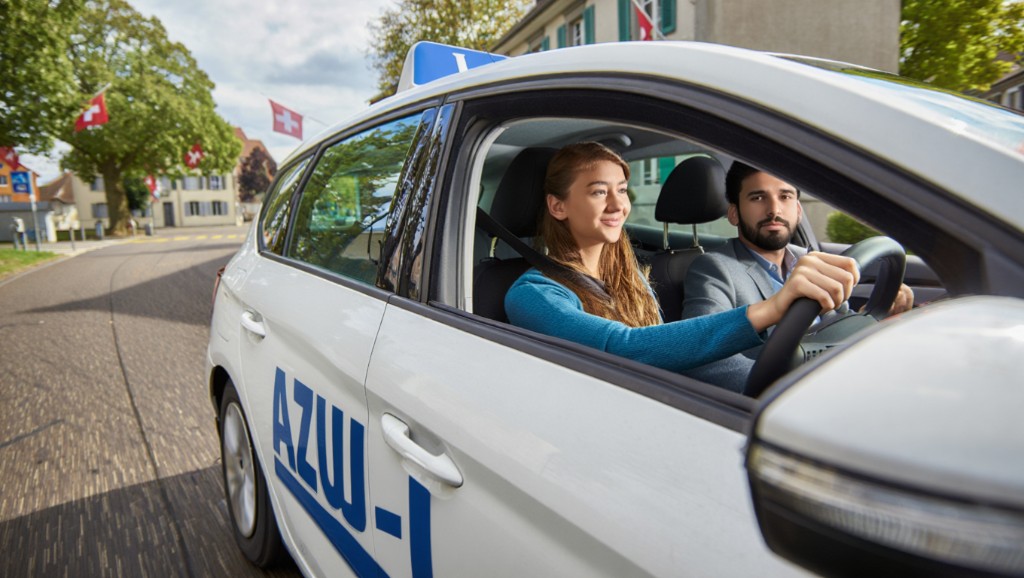
Fribourg blends universities, jobs, and public transport: many learners juggle study, work, and driving lessons. When one step becomes a bottleneck — no awareness seats, or an unrealistic theory date — the whole pathway slows, and motivation dips. The 2027 logic pushes realistic scheduling: check awareness availability first, align with your instructor, and avoid over-optimistic exam dates during busy semesters.
Choosing a driving school Fribourg with trilingual instructors and flexible slots can reduce friction: fewer missed connections between modules, steadier progress, and a single point of contact if a session must move. AZUL focuses on that end-to-end experience — from online booking to advice on sequencing theory, awareness, and practice.
Your roadmap
Timeline planning: a practical learner journey
Every journey is personal, but a sensible order reduces stress. After your learner permit, treat awareness as a strategic priority: complete all four modules without long gaps, then ramp up theory preparation when you feel ready. Only then stack practical lessons at a steady weekly rhythm rather than cramming hours right before the test — consistency beats last-minute intensity.
- 1
Awareness (4×2h)
Finish modules and keep certificates safe.
- 2
Theory
Revise systematically; book the exam only when mock tests are solid.
- 3
Practice
Maintain regular lessons to build muscle memory and confidence.
- 4
Practical test
Aim for calm, repeatable performance under pressure.
The classic mistake — booking theory before awareness is secured — becomes costly under the new sequence. Build buffer time into your plan.

Budget impact: avoiding unnecessary extra costs
A Swiss licence is a significant investment: lessons, exams, mandatory courses. Poor sequencing creates hidden costs: restarting lessons after long breaks, rebooking sessions, or delaying a job that requires a licence. Completing awareness early keeps momentum and reduces “dead time” between learning phases.
In Fribourg, compare what is included in each service and favour a transparent road awareness course Fribourg offer with clear timing, location, and alignment with the rest of your training at the same driving school Fribourg where possible.
Common mistakes to avoid
- Underestimating the gap between modules — 4×2h cannot be compressed into a single weekend.
- Setting a theory date before awareness is completed — high risk of rescheduling fees and stress.
- Skipping reflection between sessions — review notes, watch traffic as a passenger, write down questions.
- Ignoring local complexity — in Fribourg, watch mixed traffic zones and complex priorities carefully.
FAQ
Frequently asked questions
I already hold a learner permit in 2026 — do I have to retake awareness?
Can I take the theory test before I finish awareness?
How long should I allow between starting awareness and my theory exam?
Does awareness replace practical lessons?
Where can I book dates in Fribourg?
Closing thoughts
In short, the 2027 reform asks you to see awareness not as admin, but as the foundation of your future safety on the road. With a serious road awareness course Fribourg and a driving school Fribourg that tracks your progress, you turn a requirement into an advantage: less guesswork, clearer steps, and steady progress towards your licence.
Learn more
Explore our road awareness course in Fribourg page and our driving school FAQ for documents, timelines, and common questions.

Next step
Turn the 2027 pathway into your advantage
Book your road awareness course Fribourg early, keep a steady rhythm between modules, and line up theory and practice with your instructor — the same team at AZUL can help you sequence every step.
Book your road awareness course in Fribourg today
Seats fill quickly — lock in your place online on agenda.ch and stay ahead of your theory timeline. Fast replies by phone or contact form, with the same school supporting you end to end.